Pages

Thursday, February 19, 2015

Monarch High BYOD Update

Four years ago, Monarch High embarked on a groundbreaking journey, a BYOD initiative that would make them a 1:1 school in four years. It was a project that required the efforts of everyone in their community: students and teachers, parents and business leaders, and district Ed Tech, IT and administration. It was a change that was much bigger than devices; it was about a shift in school culture, professional development, and instruction. Now that four years have passed and the entire school is 1:1, let’s see what has changed at Monarch High.
Sra Farrell 17

New Tools
Moving from paper to digital tools is what is known as Substitution on the SAMR model of technology integration. SAMR (Substitution, Augmentation, Modification, Redefinition) describes how technology can be used in increasingly effective ways in the classroom. For many who are newer to technology, the Substitution phase of SAMR is the first step in a transformative journey, and this is where many at Monarch High began four years ago.


Today, most teachers and students at Monarch High rely on several key digital tools. They use an online Learning Management System (LMS) daily for posting assignments, mediating classroom discussions, and grading. Students access the LMS every day to obtain class resources, partake in the discussion board, take online tests, and submit assignments. Most classes also use a tool called Turnitin to teach students how to avoid plagiarism and develop a strong writing voice. Finally, students experience differentiated assessments through Voicethread, Vocaroo, WeVideo and other online tools.


School Culture
A school’s culture is what ultimately makes a change successful. The introduction of devices into Monarch was more than just a logistical feat; it was a challenge for individuals and for the entire school culture. Over the last four years, Monarch High teachers have shifted away from fear or distrust of technology to seeing technology as integral to instruction. Teachers are taking more risks, asking for more support and training, and collaborating with each other more. Resistant teachers are no longer resistant. They are now the first ones to say, "If this tool goes away, I will have to quit teaching!"


Student culture has been changing, too. Instead of turning in homework, they publish it online for a global audience. Instead of working in isolation, they work with each other and with experts around the world. For students, it has become second nature to capture and share their thoughts in collaborative tools like Google Docs.
Sra Farrell 16

Professional Development
One reason for the cultural shift at Monarch High was professional development support. It wasn’t just a matter of learning new tools, although that part shouldn’t be overlooked—rather, teachers were expected to change their approach to instruction as a result of using these tools, and this is happening because of a commitment to ongoing professional development.


Over the last four years, teachers have experienced a wide range of PD opportunities. They have attended training within their school teams, district PD from the BVSD Ed Tech team, and statewide conferences. In the 4th year, a part-time technology integration specialist position was created to help teachers reach the next level in their growth. Monarch also has a team of teachers who help plan and deliver professional development so that they can differentiate for the needs of their school.


Monarch instructors still have a long way to go, but a culture has been built that supports each teacher at their skill level. Now, teachers and administrators truly own their learning by setting personal goals, documenting evidence of their growth in online portfolios, and continually seeking to improve their pedagogy.


Transformative Instruction
The most profound transformation at Monarch High has been in instruction. Teachers are thinking bigger than just substituting a digital tool for a piece of paper, they are considering how they can leverage all kinds of tools to redefine instruction. In other words, they are reaching for the highest levels of the SAMR model.


Students are more engaged because they are participating in authentic learning and connecting with other students around the world. Their class time consists less of lecturing and more of inquiry and problem-based learning. They create reflective blogs and online portfolios to showcase their projects. Their homework is transitioning from paper to multimedia products that are published to a worldwide audience. You can see examples of these amazing projects, as well as a tool of the month, on the MOHI BYOD website.  
Complex #s R.Lieberman3

Monarch and Beyond
The vision that Monarch started on this journey four years ago has picked up speed throughout BVSD. There are now similar efforts in several schools around the district—Eldorado K8, Bear Creek Elementary, Angevine Middle, and most notably at Centaurus High, where a 1:Web initiative is underway. With enough funding, we hope to move the entire district to 1:Web. Through it all we can reflect on Monarch High’s transformation as an example of what can happen when tools, instruction, culture, and support at the school and district level come together to create a learning environment where students thrive.

Tuesday, February 17, 2015

What is ISTE? (Part 1)

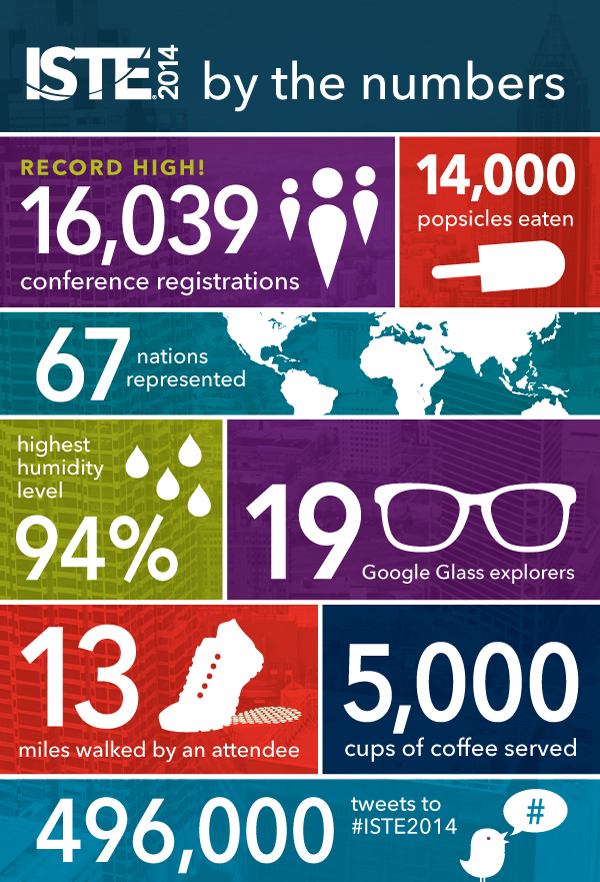
You may have had the opportunity to attend district PD, Google Apps Summit or InnEdCo locally, where you’ve built upon your instructional skills and knowledge. You may have loved spending time and collaborating with other educators. Now imagine that experience with other innovative educational leaders from across the country and around the world—experts from the classroom, ed tech, and more at your fingertips for days on end. That experience is ISTE! The International Society for Technology in Education (ISTE) hosts an ed tech conference every summer that provides transformative professional development experiences for teachers and all professionals in the education field.   


It is by design that ISTE’s trademark is “Connected Learning. Connected World”. This conference provides a platform for a variety of content in the sessions provided. Presenters and attendees hail from all corners of the globe. The scope of presenters ranges from outstanding young educators to CIOs to nationally renowned instructional leaders to Google Certified Teachers and everything in between.


Boulder Valley is, in fact, presenting at this year’s conference! The BVSD Ed Tech team will be hosting an interactive lecture called “Moving step by step into 1:Web” and presenting two poster sessions on 1:Web and “Creating a Culture of Innovation and Change on a Shoestring Budget”. Come see us!


The energy that ISTE attendees feel starts with amazing sessions and continues through the connections made face-to-face with other like-minded educators. Even as the summer days turn shorter and the sound of cicadas signal the return of school days, the passion, lessons, and tools experienced at the conference remain strong. Some session favorites have been the innovative tools shown by Leslie Fisher, (who is speaking at the Innovative Education Colorado conference in June!) such as the Anatomy 4D app (for Apple and Google Play), the augmented reality app called Aurasma, and the Word Lens app that features a visual Spanish to English translator. And who could forget the way Adam Bellow called educators to action in his 2013 keynote “Change the World”? What an inspiration!


1  2

Now that you are eager to join, when does the magic happen? This year’s conference is coming up on June 28- July 1, 2015. ISTE in Philadelphia is accepting registration now. (Can you say “cheesesteak”?)

Can’t travel? No worries, check out “What is ISTE? (ISTE Part 2)”, which will be published on this blog coming in April. The ISTE Part 2 blog will walk through the steps needed to virtually attend ISTE online, how to “attend” through social networks such as Twitter, and how to approach session selection. Also, get excited for ISTE to come to you! The city of Denver will host the conference in the summer of 2016. This is a conference you cannot miss!

Tuesday, January 13, 2015

Don't Turn It In: Publish It!

 Don’t Turn It In: Publish It!


  • “Is this for a grade?”
  • “Will this be on the test?”
  • “My printer ran out of ink so I can’t turn in my paper.”
  • “Why are we doing this?”
  • “Are you the only one who looks at this or is it for a bigger audience?”


Turning in Work by Publishing!

While the above questions might be familiar, they are often times irrelevant in the modern classroom. Now, our students have an opportunity for learning and assessment beyond the traditional model of turning in work. No longer are students or teachers limited by the process of submitting work to be graded by a teacher with little to no impact beyond the four classroom walls. With access to the world around them, students realize they can publish their work beyond their teacher, impacting a wider audience and, ultimately, increasing their engagement of the learning and project they are completing.

See examples of the possibilities below from students and teachers in BVSD

Did You Know? All of the projects below were graded electronically!

In Language Arts…
  • Students create book trailers as a way to assess their understanding of content, deeper literary elements (character, setting, etc.) and to increase student engagement. (8th grade)
  • Students wrote, illustrated and then made a video to share their beautiful watercolor artwork and imaginative "If.." book inspired by Sarah Perry's book. (1st grade)

In Science…
  • Students create online, collaborative posters with research about the periodic table of elements demonstrating understanding and application of the information (6th grade)
  • Students publish their animal research by creating a website to share with each other and their families. (3rd grade)
  • Students create videos that analyze and explain the parts of a cell. The videos are linked to a Google drawing that connect to that cell. (10th-12th grades)

In Math…
  • Students demonstrate their understanding of math skills (addition with proofs) by creating videos teaching the skill. (2nd grade)
  • Creating original thinking with systems of equations and demonstrating this learning in a presentation (6th-8th graders)  
  • Students analyze and connect math proofs to real-world issues and provide a solution by creating videos and collecting the resources in an online document. (10th-12th grades)

In Social Studies…
  • Students create digital, interactive posters that presents their research on an explorer. (5th grade)
  • Students synthesize their research of The Americas and create an online digital atlas. Then, they share with other students in the class so they can learn from each other. (6th grade)

In World Languages…
  • Students create, perform, record and publish Latin plays to learn, understand and analyze various chapters for learning. These recordings are now being used all over the country for students in other Latin classes. (9-12th grades)
  • Students create a final product for their Spanish class that captured and applied the themes they had learned through the course of the year. This particular student chose to create a website. Along with this website, students created videos and articles to publish as content on the site. (10th-12th grades)

In Music…
  • Students analyze and publish their thoughts regarding their musical selections and performances through a blog and through individual reflections of performances in a Google Form. See this portfolio for even more examples! (6-8th grades)

In Art…
  • Students create original projects/designs for a variety of purposes and student-determined audiences in this digital art course. Two examples: Ad Campaign and Book Cover design (9-12th grades)

In Health/P.E.
  • Students are monitoring heart rates using iPad apps (6th-8th grades)

Interested in learning more? Any BVSD educator to leave a comment as a response to this blog will be put into a drawing to win a copy of  Role Reversal: Achieving Uncommonly Excellent Results In The Student-Centered Classroom  Must leave a comment by February 2nd to be considered for the drawing!

A special thanks to the following educators whose student work is featured in this blog post!

Megan Cosmos*
Gregg Cruger
Kristin Donley
Melissa Duplechin*
Rebecca Feeney
Josh Feiger*
Lynn Gibert*
Rachelle Lieberman*
Lisa Norton*
Ingrid Parker*
Korrie Skibinski*
Janelle Stanton*
Caitlin Thomas*
Mary Waddell*


*21st Century Cohort Member

Monday, December 1, 2014

Innovative Learning Spaces

The bond measure that Boulder Valley voters approved on November 4 includes funds earmarked for improving learning spaces at each school. This is important because the environment that we create for students has an extensive impact on how they learn. Teachers spend countless hours personalizing their classrooms, making them more welcoming for students with bulletin boards, posters, artwork, and furniture arrangement. There are certain limitations, however, that keep us from creating spaces that support the major changes happening in education.

raked-classroom1937.jpg
Students sit in rows facing the teacher for direct instruction.
Most of our schools were built and outfitted during a time when teacher-centric classrooms were the paradigm. Desks were arranged in rows, all facing the front of the classroom. This model worked well when the only teaching model was the "sage on the stage". We now know there are multiple ways to teach and facilitate learning that include more student-centric, collaborative environments.

So what does this new, innovative classroom look like? There’s no one answer or “look”, but it should have certain key qualities. It should be modular and easily adaptable to the fluid nature of student-centric learning. For most classrooms this means moveable desks, chairs, and other furniture that can easily transition from group work to individual projects and even whole-group instruction when needed.

23-DSC_5171.JPG
The IT Copper Lab can be reconfigured for a variety of collaboration opportunities.
The innovative classroom should support a variety of learning styles rather than making every child conform to one style. For some students this means incorporating movement into their day with “fidget” chairs and plenty of well-timed breaks. For other children this may mean providing breakout spaces for quiet study or small group work. The variety of meeting configurations will also allow students to have more opportunities to share and collaborate in a space and group where they are most comfortable.

DSC_6060.JPG
Hokki stools are a fun alternative to traditional chairs.
The innovative classroom should also adapt to the technology the class is using, with plenty of charging stations and displays for projecting any device. With this flexibility, there is no ‘front of the room’; rather there are multiple areas students can turn their attention to when the teacher is delivering direct instruction to a group of students. This type of adaptation in a classroom allows teachers and students to flow more efficiently between the different types of activities and instruction that occur many times during the school day.

A redesigned classroom does more than just improve the learning experience for students while they're in school; it also prepares them for a changing work environment, where employees may use couches instead of desks, or sit at large tables instead of in cubicles.

This modern office space features modular, comfortable seating options.

The qualities of the innovative classroom—modular, inclusive, and adaptable—can be applied anywhere in a school. Libraries, cafeterias, gyms, even restrooms can be outfitted to better support the diverse needs of our students.

DSC_6015.JPG
An adjustable table and chairs can go from the library to the lunchroom.
The innovation funds from the Bond will allow your school will decide how to create spaces that will support student-centric and innovative flexible learning environments. (Please note that innovation funds cannot be used to purchase technology, such as iPads and Chromebooks).

In preparation for these changes, we encourage you to visit innovative classrooms, including the Copper Lab at IT, and notice how they affect you. Do you feel more comfortable? Empowered? Are you more engaged as a learner? If you feel different as a result of the space, imagine how your students will feel and how they will learn.

DSC_5206.JPG
Modular couches provide a comfortable meeting environment.

For More Information

Articles

Books

  • Christenson, Clayton M. Disrupting Class: How Disruptive Innovation Will Change the Way the World Learns. New York: McGraw-Hill, 2010. 
  • Crawford, Matthew B. Shop Class as Soul Craft: An Inquiry into the Value of Work. New York: Penguin Books, 2010. 
  • Friedman, Thomas. Hot, Flat, and Crowded: Why We Need a Green Revolution-- And How It Can Renew America. New York: Farrar, Straus and Giroux, 2008. 
  • Friedman, Thomas. The World is Flat: A Brief History of the Twenty-First Century. New York: Farrar, Straus and Giroux, 2005. 
  • Gardner, Howard. Frames of Mind: The Theory of Multiple Intelligences. New York : Basic Books, 1983. 
  • Goleman, Daniel. Emotional Intelligence. New York: Bantam Books, 1995. 
  • Jones, Richard. Rigor and Relevance Handbook. Rexford, N.Y.: International Center for Leadership in Education, Inc., 2010. 
  • Pink, Daniel. A Whole New Mind: Why Right-Brainers Will Rule the Future. New York: Riverhead Books, 2006. 
  • Trilling, Bernie, and Charles Fadel. 21st Century Skills: Learning for Life in Our Times. San Francisco: Jossey-Bass, 2009. 
  • Wagner, Tony. The Global Achievement Gap: Why Even Our Best Schools Don't Teach the New Survival Skills Our Children Need--And What We Can Do About It. New York: Basic Books, 2008.

Monday, November 17, 2014

BVSD 21st Century Teacher Librarian Vision


Check out the video about the new BVSD 21st Century Teacher Librarian Vision & Website! You can also read along in the transcript below.


Welcome to a tour of the BVSD 21st Century Librarian Website. During the last three years, the teacher librarian group participated in a visioning process to help strengthen their libraries, schools, students and staff. As part of the process, the teacher librarians felt that a website with information about this vision, as well as practical examples of what this “looks like” in a library would be helpful to both the librarian in his or her own professional development, and also for teachers and principals to understand the ways a teacher librarian can support the learning and instructional goals of a building.

On the homepage, there are links to each characteristic that librarians will work to embody as they continue to develop professionally. When you click on a characteristic, you are taken to a page that provides a description of the characteristic, a video featuring a BVSD teacher librarian demonstrating how they apply this characteristic in their libraries, as well as additional resources for information that supports continued growth of the topic.

For example, if I click “Student Outreach and Advocacy Leader”, I am provided a detailed list of attributes, a few videos explaining and demonstrating this characteristics, as well as resources for more information. Each of these characteristics will be updated as our teacher librarians continue to produce exemplars of their work with their students and staff.

This website has helped to provide a framework for how teacher librarians are viewed in BVSD. This website and subsequent white paper information was presented to Dr. Messinger and cabinet as a way to provide talking points with principals about staffing a 21st century library. We’d also like to point out the links to the visions of our librarians that are a part of the 21st Century Cohort--these visions are reflections of the passion this group has for their own learning as well as student learning in BVSD!

Our goal throughout this process has been to increase the information available to our district in regards to the role of the teacher librarian, as well as a way to help support movement and growth opportunities for our librarians. This past year we were fortunate to have Regina Hoskins, librarian at Southern Hills Middle School and Arlene Gregersen, librarian at Mesa Elementary School, serving in a role as teacher librarian leaders to help finalize this website as well as find ways to support teacher librarians into developing into these leaders. Their leadership, along with the leadership of Technical Services Librarian Amy Bland, District Cataloguer Rae Ciciora, and the BVSD Ed Tech team helped to finalize this material!

We will continue to work with the teacher librarians to develop these characteristics as ways to support the learning and instructional goals of our schools! And most importantly, to impact the growth and learning of our students!

Wednesday, October 29, 2014

CALCON 14 Wrap-Up

The Colorado Association of Libraries Conference (CALCON) was held on October 16-18, 2014 in Loveland. The conference highlighted a cross-section of the trends and themes of librarianship, with a special focus on Makerspace and DIY, creative collaboration between libraries, and engaging programming for children and teens (with lots of zombies, of course).

Boulder Public Library's bike-mobile outreach program

The overall mood of the conference was one of positivity and creative problem solving, despite (or because of) major changes happening in our profession. Friday’s keynote speaker, Corinne Hill, executive director of the Chattanooga Public Library, embodied this spirit of radical change while still being grounded in the overall mission of libraries as institutions of knowledge and information. As Corinne put it, “We’re librarians. No one is going to die if we make a mistake, so get out there and innovate.”

This year’s conference was a showcase for many librarians across the state to present on special programs and initiatives happening in their libraries. Here is a small sampling of sessions:

  • Convergence: a dauntless approach to collaboration
  • A library bike bespoke for you: innovative outreach
  • You can do it! Create digital content
  • Light bulb to launch: getting your new ideas to happen
  • Media labs on the cheap: free and open source software
  • Robots loose in the library!
  • Play is serious business
  • Partnerships and collaboration: connecting with other libraries
  • Leading from where you are

Check out the entire conference schedule here.

Several teacher librarians and library leadership represented BVSD at CALCON this year.  Beatrice Gerrish co-facilitated two sessions: Dewey or don’t we? Transitioning to the bookstore model, and Reject the fears and embrace a balanced future: creating libraries that are the heart of their schools. Amy Bland and Nannette McMurtry also led two sessions: It’s all about choice, baby! Flipping the professional development model for librarians, and Going Google in the library.

A conference shouldn’t end with the closing keynote. The whole point is to share and apply what you learned when the conference is over. We shared our learning in several ways: we collected our conference notes in this shared folder that any teacher librarian can access. We also tweeted the conference using #cocalcon14 (hint: you can follow any conference this way, even if you don’t attend—just follow the conference hashtag). If you are interested, we encourage you to check out those resources to see how other Colorado librarians are growing and leading.

Friday, October 24, 2014

Google Apps Summit at Monarch High School a Huge Success!


Over 350 educators from across Colorado attended the Google Apps For Education Summit on October 11 & 12, 2014. The conference featured keynote speakers who shared inspiring stories of how technology can empower young people. Ken Shelton articulated why technology matters by sharing the story of Michael, a boy with autism who uses technology to communicate to the world. Molly Schroeder inspired us to forget perfection and “live in beta”. She shared how technology and 3D printing created new arms for children suffering from the wars in Sudan. These speakers pushed us to embrace moonshot thinking, to redefine how we dream, and to forge ahead into the age of digital learning.
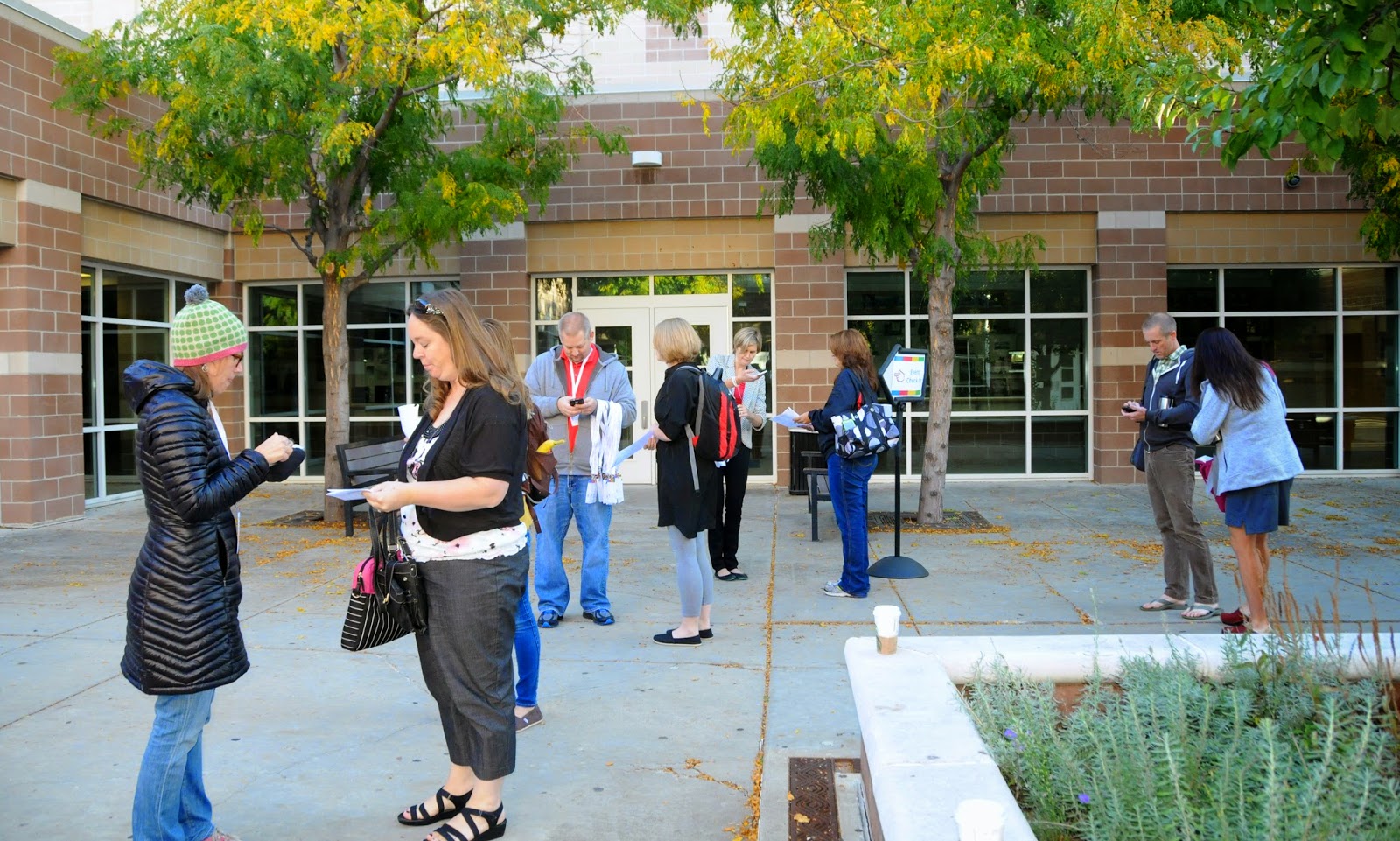
GAFE participants gather outside to check in.

Throughout the rest of the summit, we attended hour-long sessions taught by educators and leaders in educational technology from around the state, Google Apps Certified Teachers, and BVSD teachers. Many of the resources are linked on the schedule, so if you could not attend, please check it out.


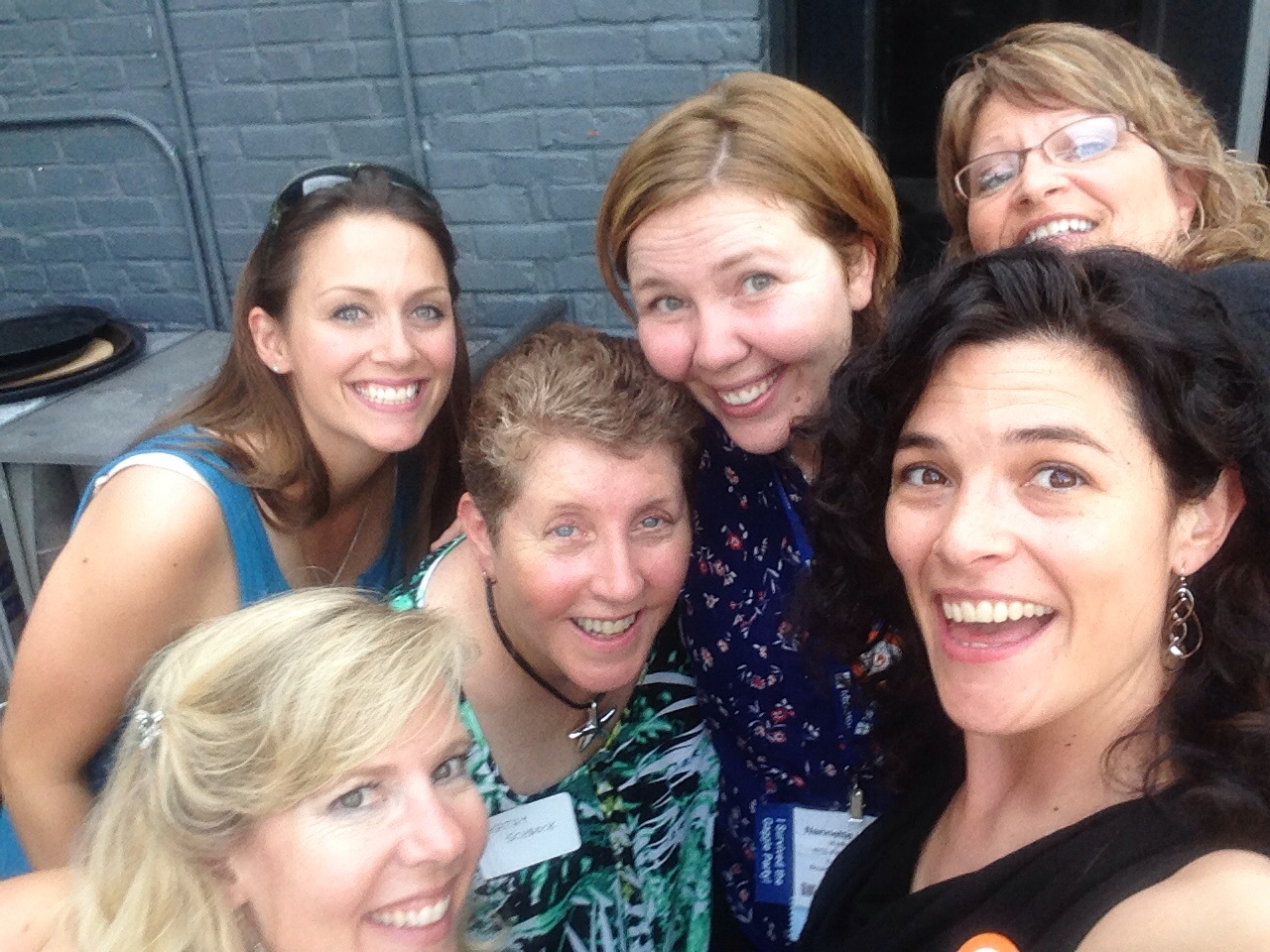
Kelly is excited to start a weekend of learning.
We had over 100 BVSD teachers and leaders attend the summit. I would love to hear your reactions to the summit and respond to my Google Plus post or to this blog about your top two takeaways from the summit.

If you were one of the attendees, you might have been inspired to become a conference presenter yourself. We encourage you to submit a proposal to present at the 2015 InnEdCo Conference (June 23-25). The 2015 conference has a lot of flexibility for presentation styles, not just the traditional “sage on the stage” session. It’s a great conference for first-time presenters, and we are confident that many BVSD teachers are ready for this next step.
Luci and Art helped our technology run smoothly.